
Shower seats.
In your everyday bathroom routine, a shower seat is an indispensable aid and safety feature that makes washing safe, relaxing and less physically demanding. It is a waterproof…
-
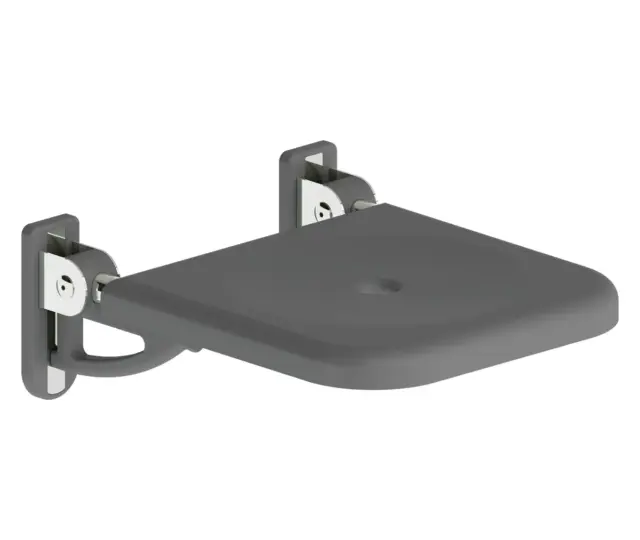 NIL_T51A
Deante Lehnen foldable wall-mounted shower seat, anthracite
Supplier stock · 3 pcs531.29 € 3 × 177.10 € -
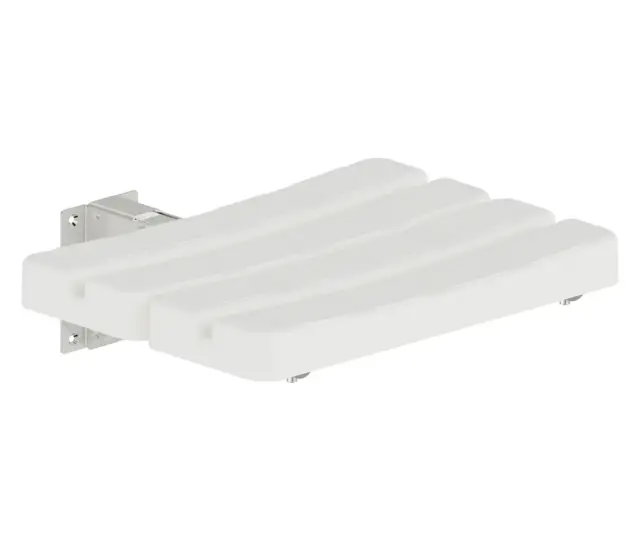 NIL_651A
Deante Lehnen folding wall-mounted shower seat, white
Supplier stock · 2 pcs714.66 € 3 × 238.22 € -
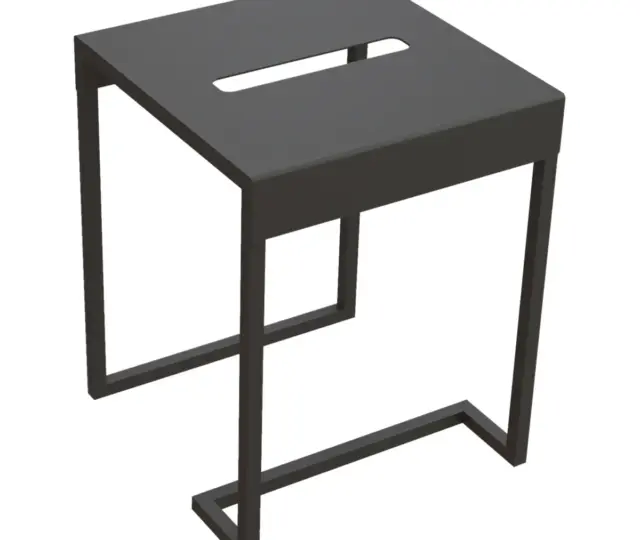 ADM_N51T
Deante Mokko multifunctional bathroom stool, matt black
Supplier stock · 7 pcs135.12 € 3 × 45.04 € -
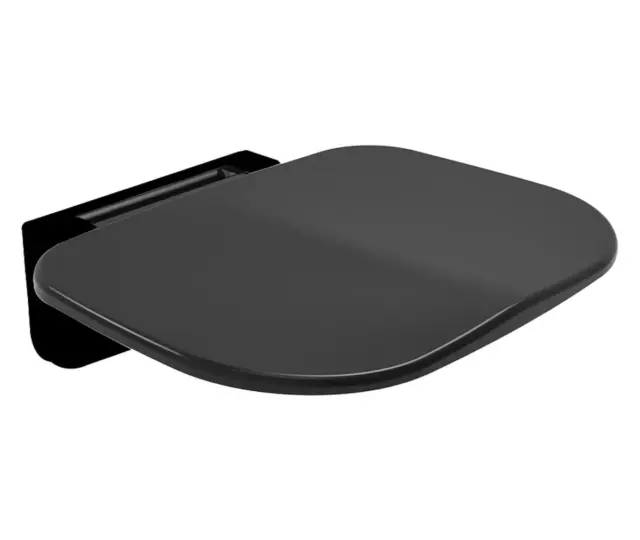 NIV_N51B
Deante Vital foldable wall-mounted shower seat, matt black
Supplier stock · 100+ pcs123.45 € 3 × 41.15 € -
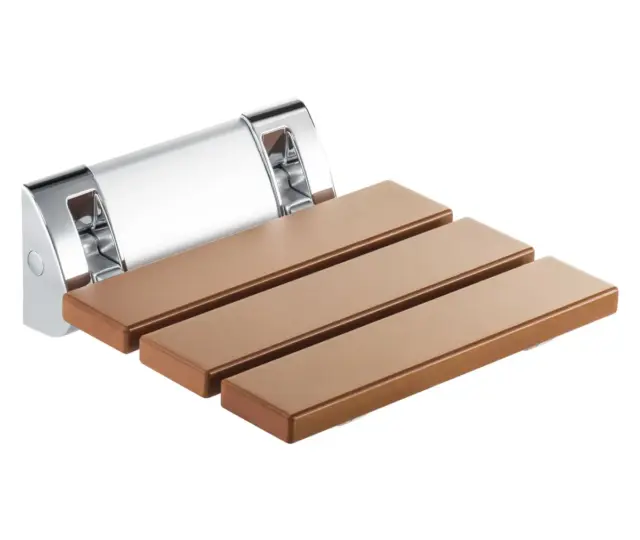 NIV_451P
Deante Vital folding wall-mounted shower seat, brown/chrome
Supplier stock · 100+ pcs125.79 € 3 × 41.93 € -
OTSAS
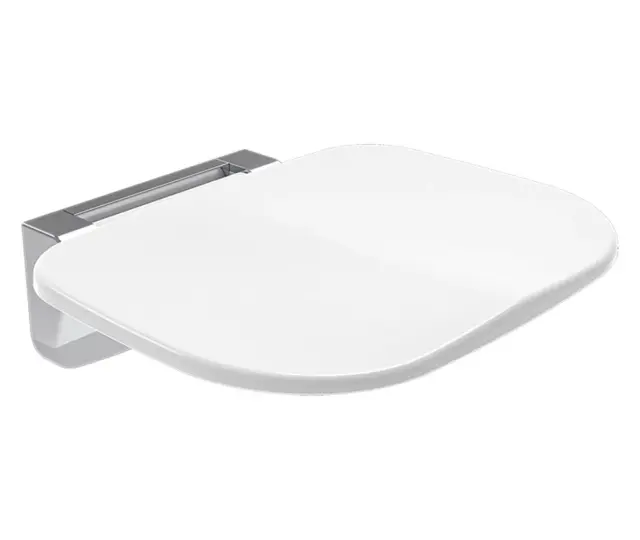 NIV_A51B
Deante Vital folding wall-mounted shower seat, matt white/chrome
Out of stock116.45 € 3 × 38.82 € -
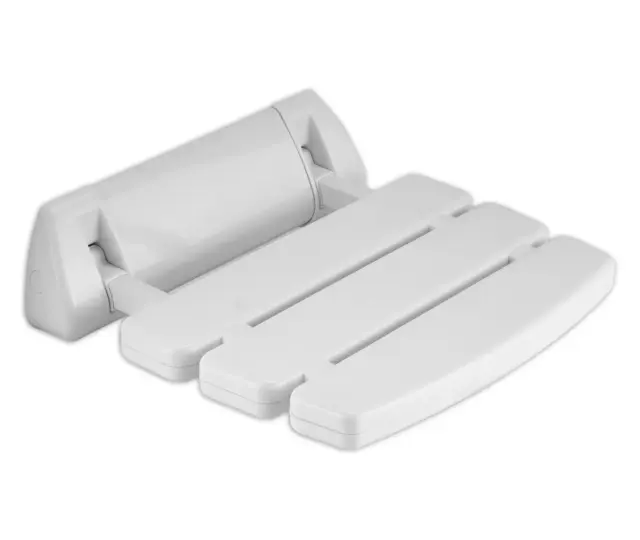 NIV_651A
Deante Vital folding wall-mounted shower seat, white
Supplier stock · 100+ pcs104.78 € 3 × 34.93 €
Continue where you left off
Everything you need to know.
- Wall-mounted folding shower seat
- Free-standing shower seat and stool with adjustable legs
- Safety seats with armrests and a backrest
- Surface texture and drainage holes
- Leg frame and suction feet
- Level-access shower and space
- Coordinating with sanitary ware
- Load capacity standards
- Wall fixing requirements
- Cleaning and disinfection
- 1. How do you choose the right seat height for a shower seat?
- 2. Can the rubber feet of a shower seat mark light-coloured floor tiles?
- 3. Can a folding shower seat be fitted to a glass wall?
- 4. What is a shower seat with a hygiene opening for?
- 5. How do you care for the moving hinges of a shower seat?
In your everyday bathroom routine, a shower seat is an indispensable aid and safety feature that makes washing safe, relaxing and less physically demanding. It is a waterproof seat designed specifically for wet, slippery conditions: it supports your body weight securely, helps prevent slips and falls and lets you enjoy the warm spray in comfort while seated. Unlike ordinary chairs, it is made from non-corroding materials such as anodised aluminium, hygienic non-slip thermoplastic or stainless steel.
A well-chosen shower seat isn’t only for older people or those with reduced mobility – it offers welcome extra ergonomic comfort to homeowners of any age, from foot care and shaving to recovering from an injury. In a well-thought-out bathroom, a quality seat is a natural part of a fully accessible room. In this guide we look at the types of shower seat, load capacity, what to bear in mind when fixing them to the wall, and care tips.
1. Types of shower seat: wall-mounted, free-standing or on wheels?
When choosing a shower seat, the main criteria are the size of the room, how mobile the user is and whether the seat needs to be moved to other rooms or temporarily taken out of the shower.
Wall-mounted folding shower seat
A wall-mounted model is ideal for smaller shower rooms. When the seat isn’t in use, you simply fold it up against the wall, freeing up floor space for other family members. Sturdier wall-mounted models come with extra legs that rest on the floor and reduce the pull-out load on the wall anchors.
Free-standing shower seat and stool with adjustable legs
A free-standing shower seat offers maximum flexibility: you can move it to suit the angle of the spray or take it to another spot in the bathroom when needed. Adjustable telescopic legs let you set the seat to exactly the right height for the user (usually within a range of 40–55 cm).
Safety seats with armrests and a backrest
For people with balance problems or limited upper-body control, a version with armrests and a contoured backrest gives the best support. The armrests provide a firm point of support when sitting down and getting up, keeping the strain on the joints to a minimum.
2. Materials, slip resistance and drainage
A shower places extreme demands on materials: constant water, slippery soap suds, temperature changes and cleaning chemicals must not damage the product or cause rust.
Surface texture and drainage holes
A quality seat has a special slightly textured surface that stops you from slipping, even with plenty of soapy water. Drainage holes perforated in the seat let water and shower gel run off immediately, preventing puddles on the seat and making washing more comfortable.
Leg frame and suction feet
The frame is made of anodised aluminium or stainless steel, which keeps it corrosion-resistant for years. The ends of the legs are fitted with large suction feet made of soft rubber or thermoplastic elastomer (TPE). These grip ceramic floor tiles firmly and stop the seat from shifting unexpectedly on a wet surface.
3. Bathroom planning: ergonomics and full accessibility
A safe, modern bathroom isn’t made up of separate, unrelated items; it forms a well-thought-out whole where the routes through the room are clear and unobstructed.
Level-access shower and space
Today’s standard favours level-access showers flush with the floor (known as walk-in showers), which are easy to step into without a shower tray edge to trip over. A shower seat placed in such a shower ensures smooth, safe movement.
Coordinating with sanitary ware
In an accessible bathroom, it is important to keep as much floor space clear as possible. That is why a modern wall-hung toilet makes the ideal companion to a shower seat, leaving the floor under the bowl completely clear. Not only does it make the room look more spacious, it also makes manoeuvring with a wheelchair or walking frame much easier and lets you mop the floor quickly and without obstacles.
4. Load capacity, installation guidelines and safe care
Safety rests on correct installation and on using the product within its load class.
Load capacity standards
The load capacity of a standard shower seat is usually 100–130 kg. For heavier loads, reinforced bariatric models are available, with a permitted load capacity of 160–250 kg. When choosing, always take into account not only the user’s body weight but also the extra dynamic load created when someone sits down heavily.
Wall fixing requirements
When fitting a folding wall-mounted model to a plasterboard or lightweight stud wall, it is crucial to use in-wall reinforcement boards or special installation frames. A seat screwed only into the plasterboard skin of a lightweight wall can tear out of the wall under load. On concrete and masonry walls, quality stainless steel chemical or metal anchors are used.
Cleaning and disinfection
To keep it hygienic, wash the seat and frame regularly with a neutral detergent and water. Avoid strong acids, acetone and abrasive pastes, which can damage the protective layer of the aluminium and leave the plastic seat with micro-cracks that attract dirt.
Key points
An ergonomic, durable shower seat is a simple yet life-changing addition to any bathroom, offering peace of mind, confidence and luxurious seated comfort. When choosing the right product, consider the user’s individual needs, the dimensions of the room and the stability and load capacity of the product.
If you are renovating a bathroom or creating a new, comfortable and accessible space, think through how the whole room will work. Choose a reliable and stylish wall-hung toilet from the Nordhauser range for a harmonious, clean and spacious interior for many years to come.
-
Safety and stability: A shower seat helps prevent falls on slippery tiles and makes washing stress-free.
-
Choosing the right model: A folding wall-mounted model suits a small room; in a more spacious bathroom, a free-standing, height-adjustable seat.
-
Corrosion-resistant materials: Anodised aluminium, hygienic plastic and rubber feet ensure a long service life.
-
Complete accessibility: A level-access shower and wall-hung sanitary ware give you free space to move and easy cleaning.
-
The right fixing method: Folding wall-mounted seats need a strong load-bearing wall or special stud reinforcement.
Frequently asked questions
1. How do you choose the right seat height for a shower seat?
The right height is one where the user’s feet rest firmly on the floor and the knees are at a 90-degree angle. This gives the most stable position and makes it easier to stand up.
2. Can the rubber feet of a shower seat mark light-coloured floor tiles?
Quality manufacturers use grey or white thermoplastic elastomer (TPE), which leaves no streaks or scuff marks on ceramic tiles. Cheaper black rubber compounds can stain light grout lines through prolonged friction.
3. Can a folding shower seat be fitted to a glass wall?
No, shower seats and grab bars must never be fixed to glass shower walls. They must be fixed to a solid masonry wall or a partition wall reinforced with a frame.
4. What is a shower seat with a hygiene opening for?
A seat with a U-shaped or central cut-out allows the intimate area to be washed comfortably without getting up from the seat, which matters for people with limited mobility.
5. How do you care for the moving hinges of a shower seat?
The stainless steel hinges of folding models should be rinsed with clean water from time to time to remove soap residue, and the fixing bolts should be checked for tightness once a year if needed.