
Wall-hung toilets.
A wall-hung toilet is the top choice in modern sanitary ware: the ceramic pan is mounted on the wall using a special steel frame, while the cistern and…
-
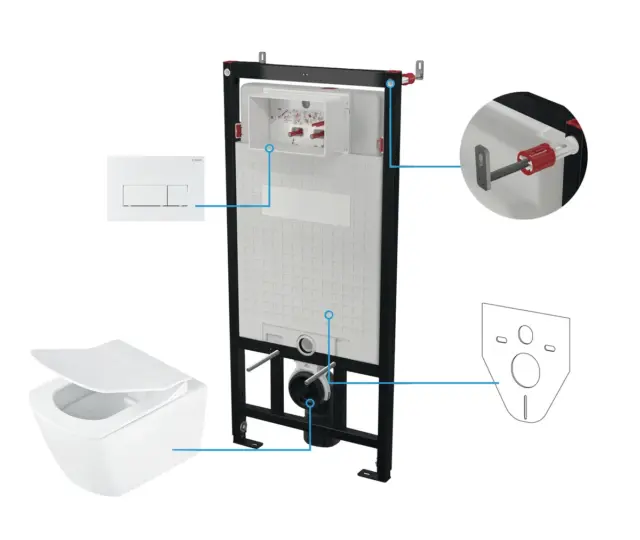 CDZA6ZPW
Deante Blur 6-in-1 concealed WC set, white
Supplier stock · 2 pcs629.85 € 3 × 209.95 € -
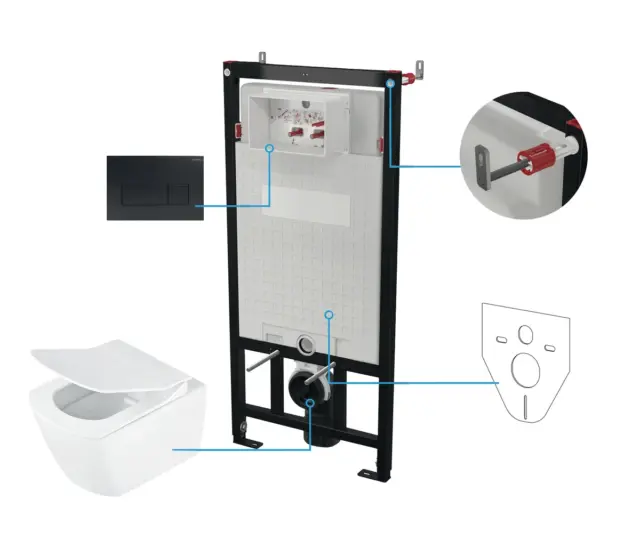 CDZN6ZPW
Deante Blur 6-in-1 concealed WC set, white/black
Supplier stock · 4 pcs629.85 € 3 × 209.95 € -
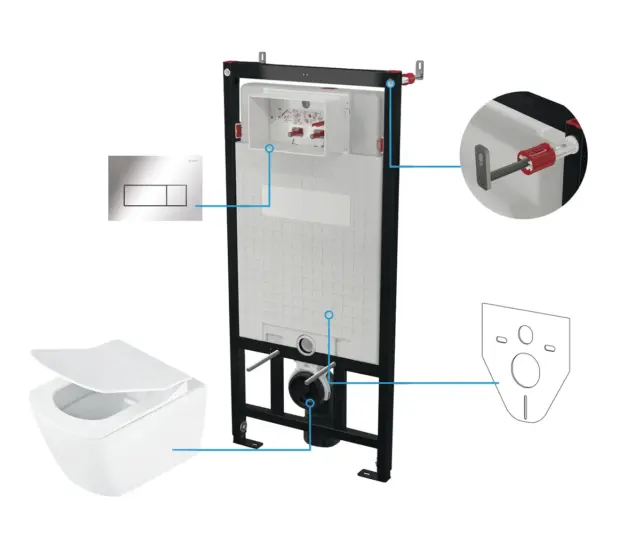 CDZS6ZPW
Deante Blur 6-in-1 concealed WC set, white/chrome
Supplier stock · 4 pcs606.51 € 3 × 202.17 € -
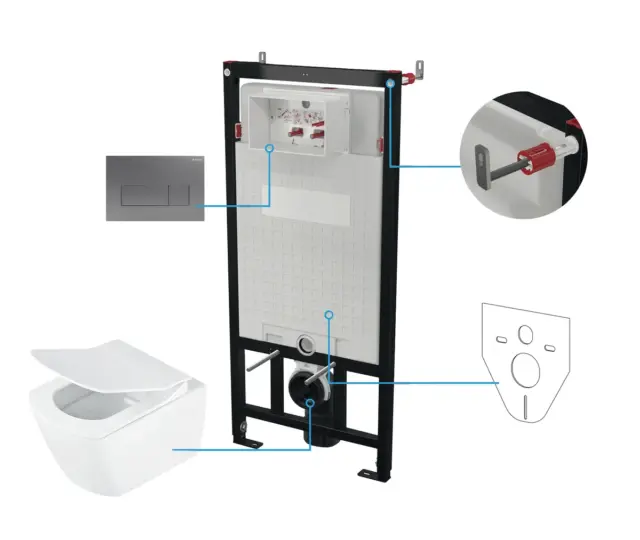 CDZT6ZPW
Deante Blur 6-in-1 concealed WC set, white/titanium
Supplier stock · 3 pcs629.85 € 3 × 209.95 € -
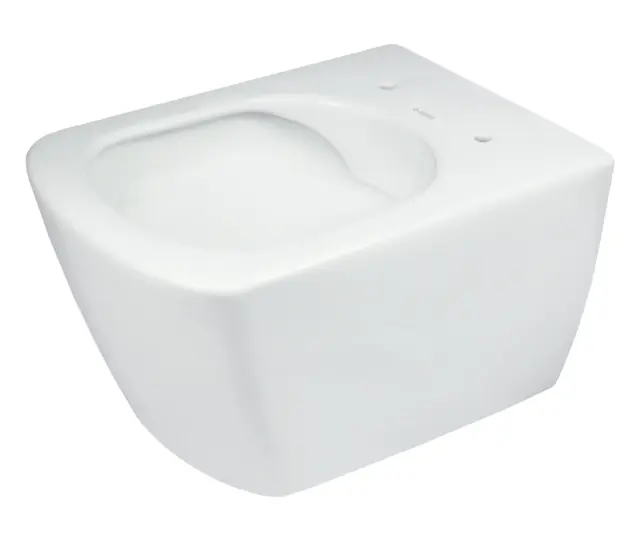 CDZ_6ZPW
Deante Blur wall-hung toilet 513 × 370 mm, white
Supplier stock · 19 pcs279.81 € 3 × 93.27 € -
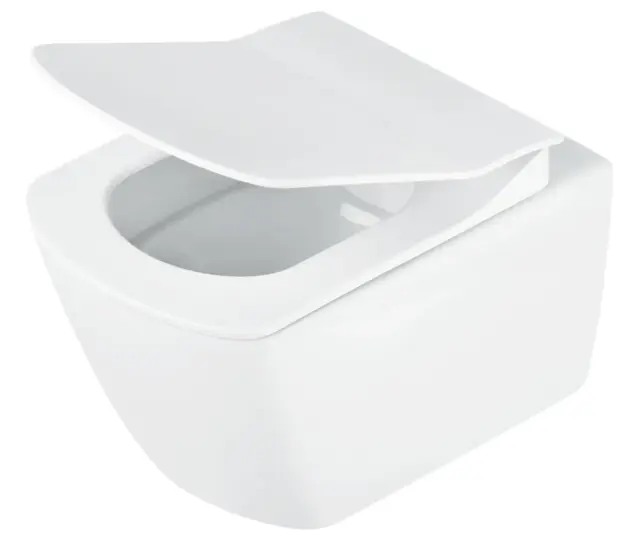 CDZD6ZPW
Deante Blur wall-hung toilet with seat 513 × 370 mm, white
Supplier stock · 55 pcs349.82 € 3 × 116.61 € -
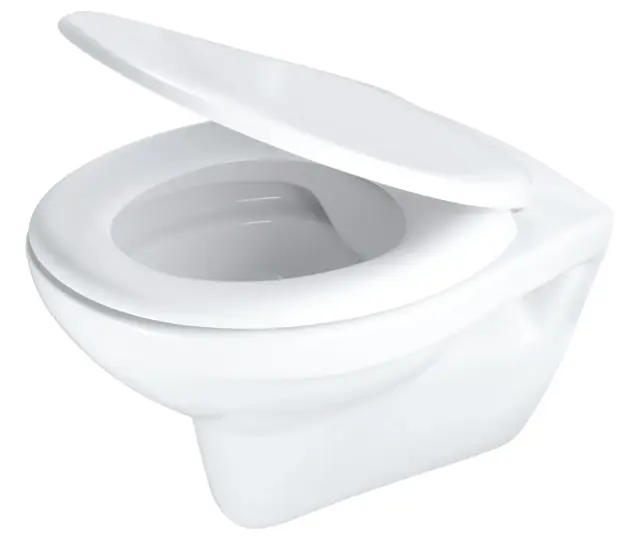 CMOD6SPW
Deante Boro wall-hung toilet with seat 529 × 375 mm, white
Available to order163.12 € 3 × 54.37 € -
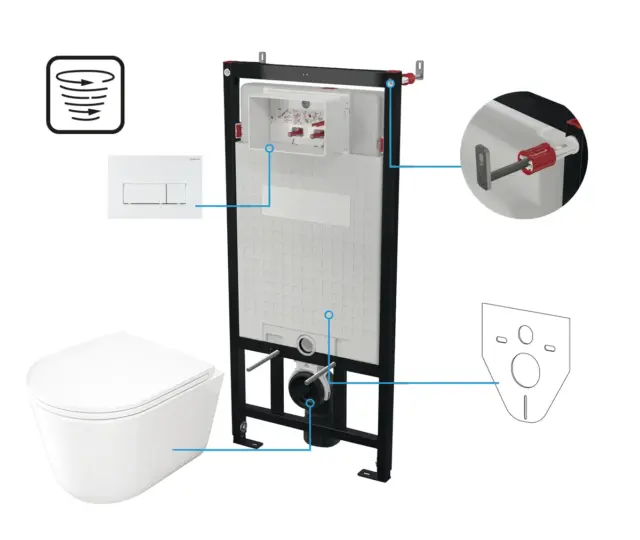 CDJA6ZPW
Deante Jasmin 6-in-1 concealed WC set, white
Supplier stock · 4 pcs457.16 € 3 × 152.39 € -
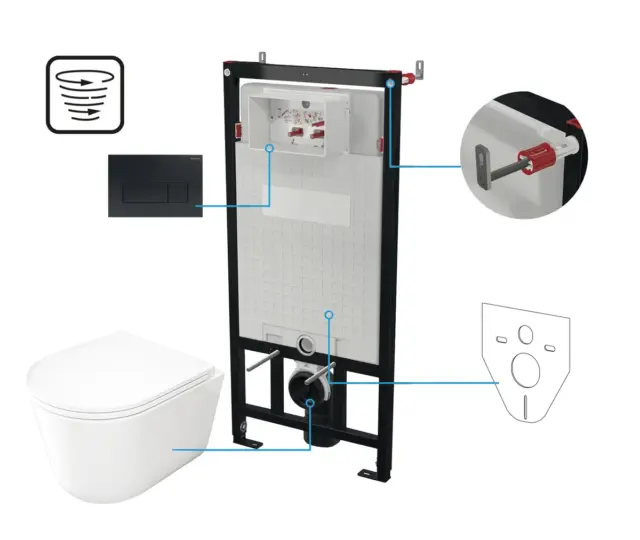 CDJN6ZPW
Deante Jasmin 6-in-1 concealed WC set, white/black
Available to order457.16 € 3 × 152.39 € -
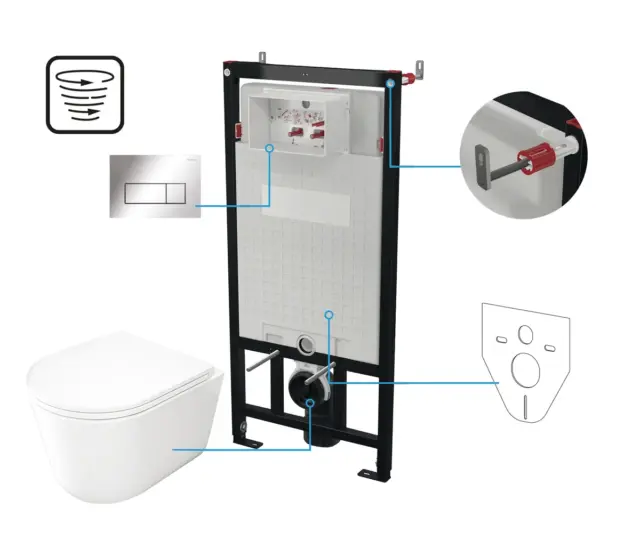 CDJS6ZPW
Deante Jasmin 6-in-1 concealed WC set, white/chrome
Available to order457.16 € 3 × 152.39 € -
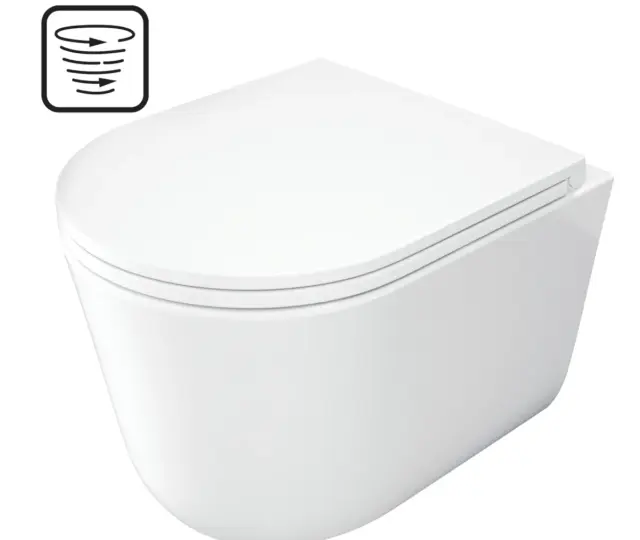 CDJD6ZPW
Deante Jasmin wall-hung toilet with seat 490 × 360 mm, white
Available to order223.80 € 3 × 74.60 € -
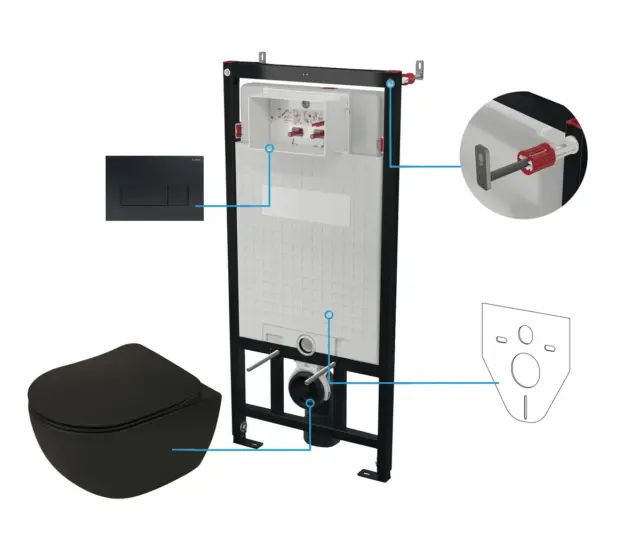 CDENNZPW
Deante Peonia 6-in-1 concealed WC set, black
Supplier stock · 5 pcs769.87 € 3 × 256.62 € -
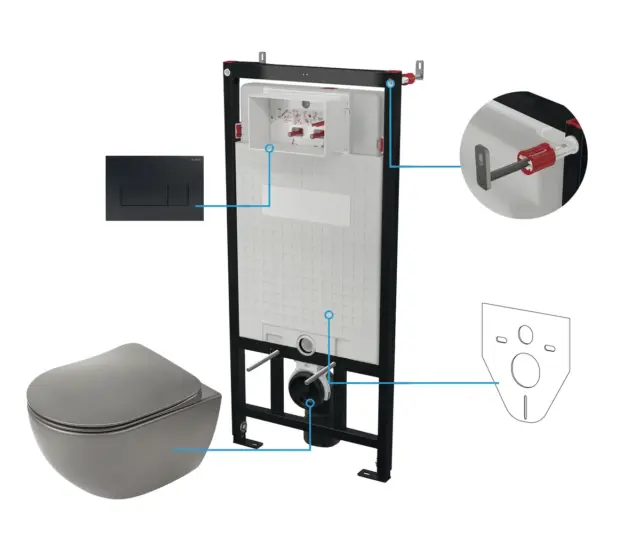 CDENDZPW
Deante Peonia 6-in-1 concealed WC set, black/titanium/anthracite
Supplier stock · 5 pcs769.87 € 3 × 256.62 € -
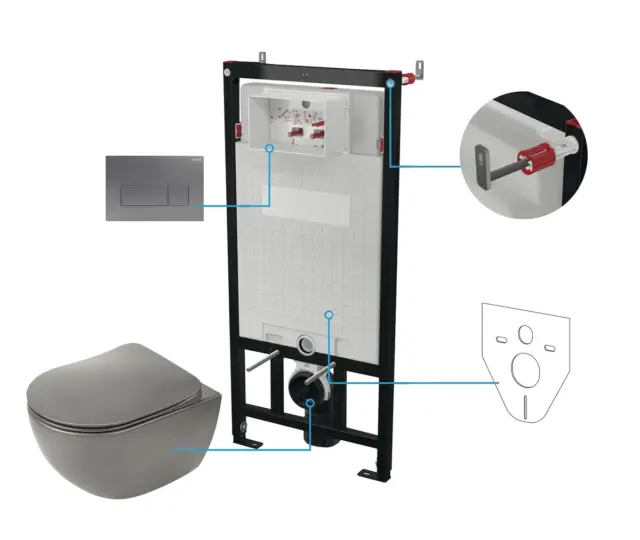 CDETDZPW
Deante Peonia 6-in-1 concealed WC set, titanium/anthracite
Supplier stock · 5 pcs769.87 € 3 × 256.62 € -
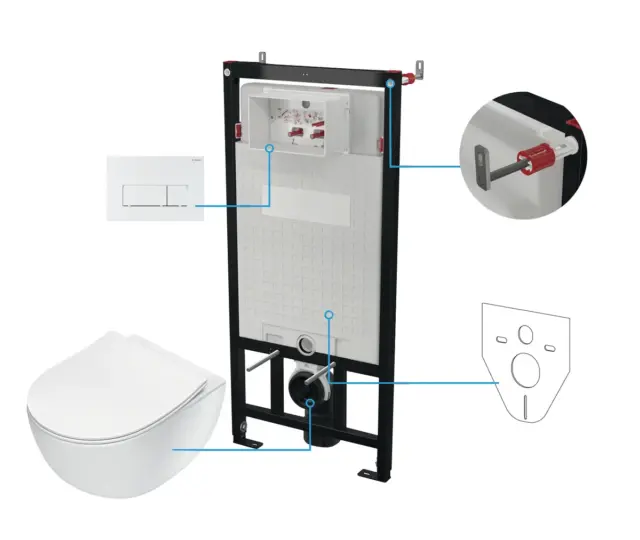 CDEA6ZPW
Deante Peonia 6-in-1 concealed WC set, white
Supplier stock · 5 pcs583.17 € 3 × 194.39 € -
LAOTOODE
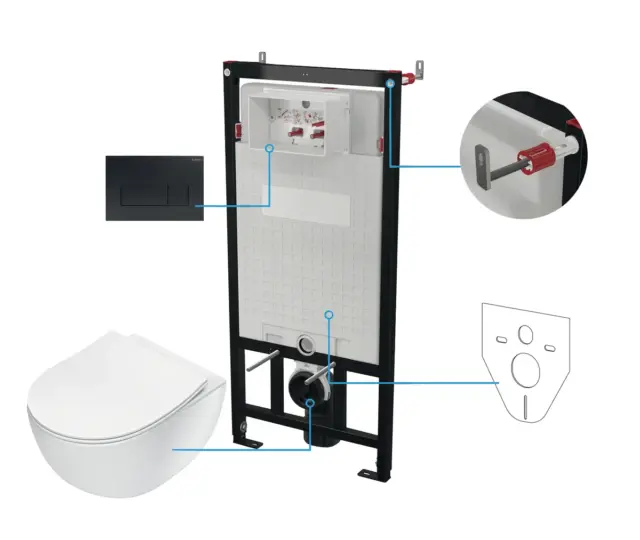 CDEN6ZPW
Deante Peonia 6-in-1 concealed WC set, white/black
1 in stock583.17 € 3 × 194.39 € -
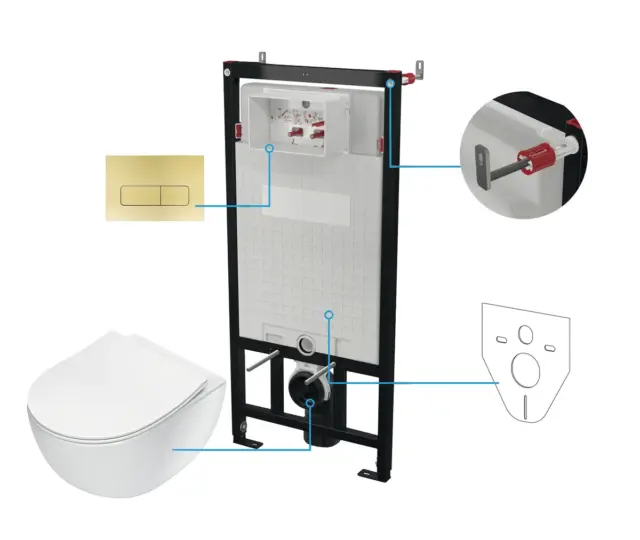 CDER6ZPW
Deante Peonia 6-in-1 concealed WC set, white/brushed gold
Supplier stock · 17 pcs769.87 € 3 × 256.62 € -
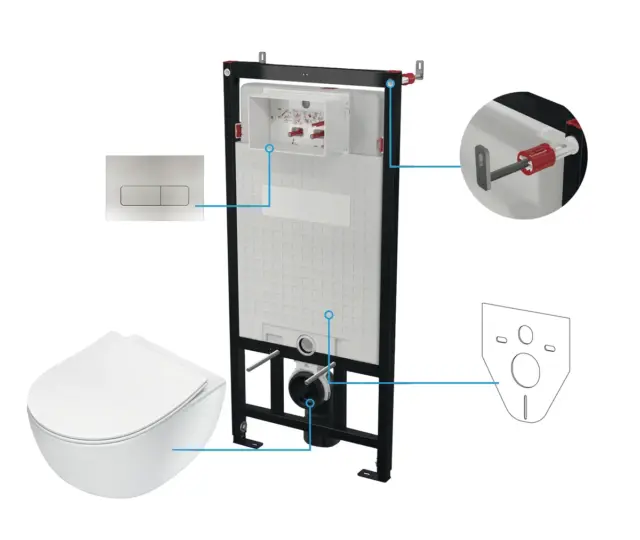 CDEF6ZPW
Deante Peonia 6-in-1 concealed WC set, white/brushed steel
Supplier stock · 3 pcs769.87 € 3 × 256.62 € -
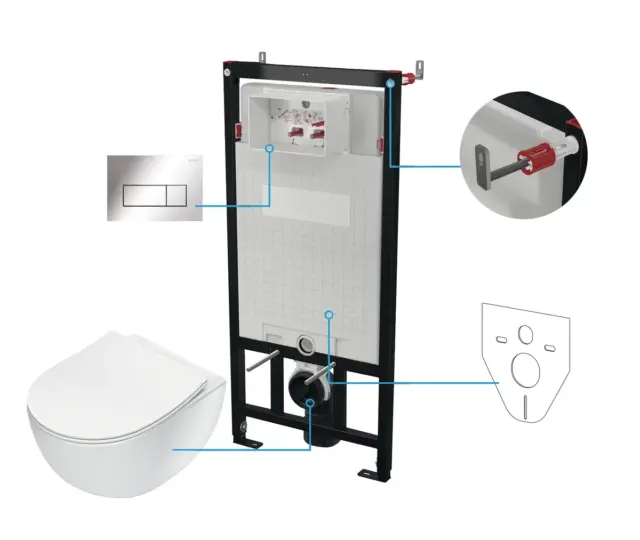 CDES6ZPW
Deante Peonia 6-in-1 concealed WC set, white/chrome
Supplier stock · 11 pcs559.84 € 3 × 186.61 € -
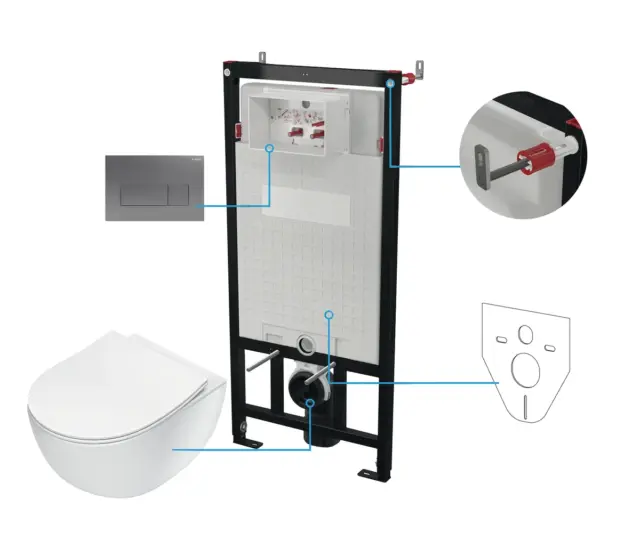 CDET6ZPW
Deante Peonia 6-in-1 concealed WC set, white/titanium
Supplier stock · 20 pcs583.17 € 3 × 194.39 € -
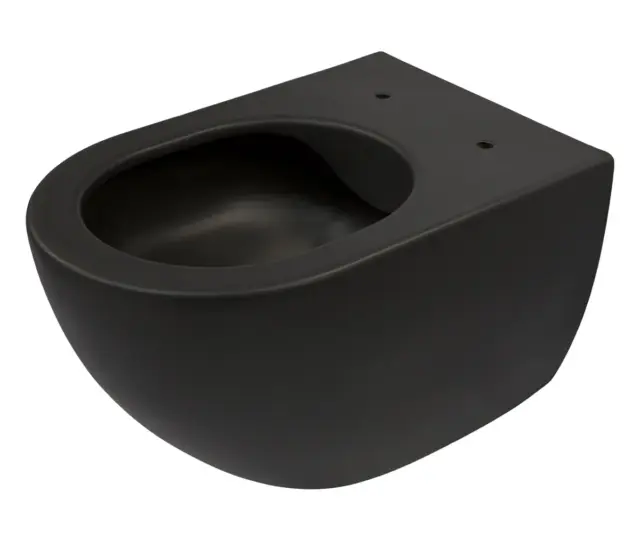 CDE_NZPW
Deante Peonia wall-hung toilet 510 × 360 mm, black
Supplier stock · 19 pcs373.15 € 3 × 124.38 € -
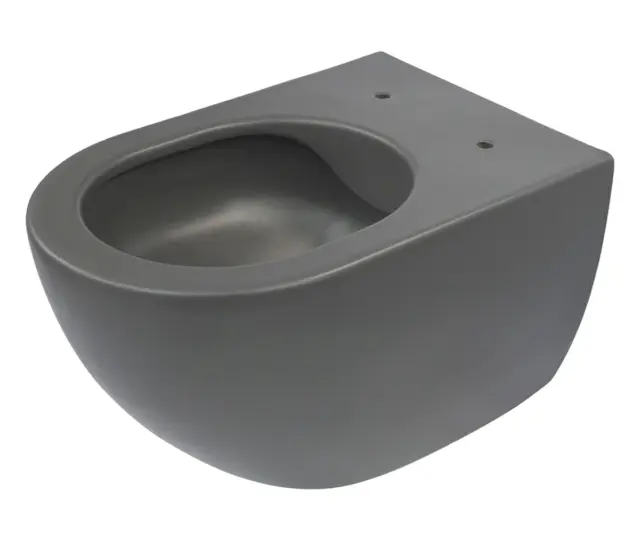 CDE_DZPW
Deante Peonia wall-hung toilet 510 × 360 mm, titanium/anthracite
Supplier stock · 25 pcs373.15 € 3 × 124.38 € -
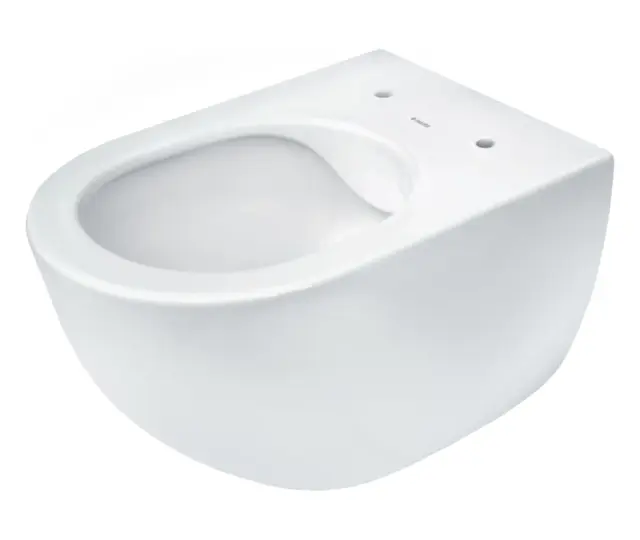 CDE_6ZPW
Deante Peonia wall-hung toilet 510 × 360 mm, white
Supplier stock · 100+ pcs233.13 € 3 × 77.71 € -
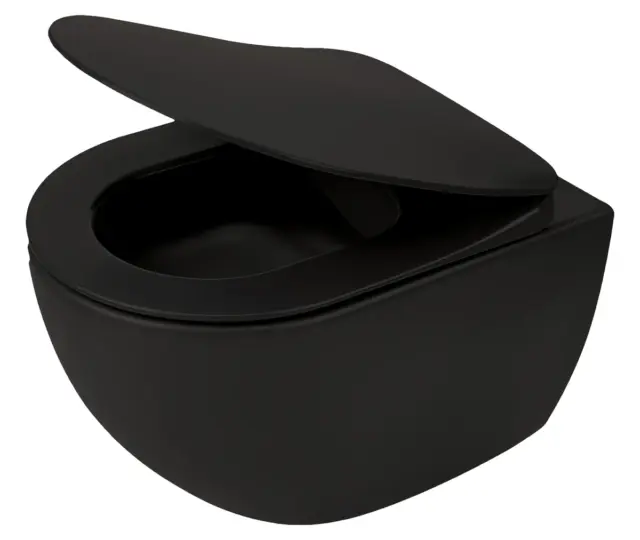 CDEDNZPW
Deante Peonia wall-hung toilet with seat 510 × 360 mm, black
Available to order489.82 € 3 × 163.27 €
Continue where you left off
Everything you need to know.
- Complete freedom when cleaning the floor
- Rimless design
- Preventing condensation and soundproofing
- Setting the installation height before closing in the frame
- Closing in the frame and fixing the ceramic
- Servicing and repairs through the flush plate opening
- Water-saving dual flush
- 1. Can a wall-hung toilet break off the wall under a heavier person?
- 2. How do you repair a wall-hung toilet if the water keeps running?
- 3. What is the ideal installation height for a wall-hung toilet?
- 4. Why do you need a sound-insulation pad behind the toilet?
- 5. Can a wall-hung toilet be installed on a plasterboard wall?
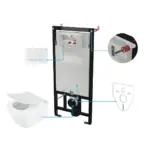
A wall-hung toilet is the top choice in modern sanitary ware: the ceramic pan is mounted on the wall using a special steel frame, while the cistern and pipework are hidden inside the wall. Unlike a traditional floor-standing model, a wall-hung toilet leaves the bathroom floor completely clear, making the room feel more spacious and easier to clean. The whole set-up rests on a sturdy system made up of a quality concealed frame, a stylish toilet and an ergonomic soft-close toilet seat.
A modern wall-hung toilet offers more than minimalist design: it combines rimless flushing, effective noise reduction and water-saving technology.
Advantages and hygiene features of a wall-hung toilet
When renovating a bathroom, more and more homeowners are choosing wall-hung models for their practical and aesthetic qualities. A wall-hung toilet solves several of the typical problems that come with traditional toilets.
Complete freedom when cleaning the floor
With floor-standing models, dirt, dust and moisture inevitably collect around the base of the toilet and along the silicone joint, where they are hard to reach. Because a wall-hung toilet floats above the floor, you can get underneath it with a mop without any obstacles. This makes for a noticeably cleaner indoor environment and stops unpleasant odours from forming in the floor joints.
Rimless design
A rimless toilet has no inner rim – the part of a classic toilet where limescale and bacteria build up.
-
Precise water flow: Water enters the bowl through special side outlets, creating a powerful horizontal swirl.
-
Fewer chemicals needed: Surfaces stay clean without aggressive chlorine-based cleaners, which is kinder to both the glaze and the environment.
-
High-quality glaze: A modern antibacterial ceramic glaze makes the porcelain surface exceptionally smooth, preventing dirt from clinging to microscopic pores.
Anatomy of a concealed frame: load capacity and noise reduction
The foundation for the strength and function of the entire wall-hung system is the installation frame hidden behind the plasterboard or masonry.
A common concern among homeowners is whether a wall-hung system can cope with heavier loads. Under the European standard EN 997, a certified installation frame and ceramic must withstand a static load of at least 400 kg. Made from strong powder-coated steel sections, the frame transfers the weight directly to the floor and the load-bearing wall, eliminating any risk of the ceramic breaking or the wall giving way.
Preventing condensation and soundproofing
Because the cistern sits inside a closed wall, it is crucial to prevent moisture forming inside the wall:
-
EPS insulating jacket: The concealed cistern comes with a factory-fitted expanded polystyrene jacket, which stops condensation forming on the frame where cold water meets the warm room temperature.
-
Toilet sound-insulation pad: A special flexible sound-insulating pad is fitted between the ceramic and the wall tiles. It dampens the vibration from running water and from sitting down, stopping noise travelling through the building structure into neighbouring rooms.
Installation steps, building the frame and setting the height
A correctly carried out concealed toilet frame installation ensures stability and prevents the walls from cracking over the years.
Setting the installation height before closing in the frame
One of the biggest advantages of a wall-hung system is that you can adjust the seat height during installation:
-
Standard height: The standard seat height, including the toilet seat, is 41–43 cm from the finished floor.
-
Ergonomic height: For taller or older users, the toilet is set at a height of 45–48 cm, which reduces strain on the knee joints.
Building rule for homeowners: The height markings on the legs of the installation frame (e.g. the 1-metre line) refer to the level of the final finished floor (including the screed and the ceramic tiles). Don’t align the frame with the bare concrete floor, or your wall-hung toilet will end up too low once the tiling is done!
Closing in the frame and fixing the ceramic
-
Double plasterboard: The installation frame is always clad with either a double layer of moisture-resistant plasterboard (2 × 12.5 mm) or a special reinforced building board (e.g. Tepepan). A single layer of plasterboard flexes under load and causes micro-cracks in the tiles.
-
Soil pipe connection: Fitting the toilet outlet connector is done with a special lubricant, with the connection pipes cut exactly to length to match the combined thickness of the plasterboard and tiles.
-
Fixing: Once the tiling is done, the threaded rods are screwed through the sound-insulation pad into the ceramic and the nuts are tightened evenly with a torque wrench.
Flush mechanisms, water saving and concealed cistern maintenance
There is a common myth that if a concealed cistern fails, the tiled bathroom wall has to be torn down. In reality, the system is designed to be fully serviceable without breaking into the wall.
Servicing and repairs through the flush plate opening
All servicing of a concealed cistern through the flush plate is done via the removable actuator plate.
-
Push the flush plate gently upwards and pull it off towards you.
-
Behind the plate is a special service opening, through which you can close the built-in shut-off valve.
-
Through this opening you can take out both the fill valve (float) and the flush valve seal without any special tools, clean them or replace them with new ones if needed.
Water-saving dual flush
Modern water-saving dual flush lets you choose between two modes: a small flush (usually 3 litres) and a full flush (4.5–6 litres). By turning the flush valve float down to the minimum, you can cut consumption to as little as 2 / 4 litres, saving an average household tens of thousands of litres of water a year.
Key takeaways
A wall-hung toilet is the standard for functionality, durability and good looks in a modern home bathroom. With the installation frame hidden inside the wall, the room feels more spacious and stylish, while the clear floor and rimless ceramic keep everything spotless with minimal effort. There is no need to fear having to tear down the wall if something goes wrong – all the cistern mechanics are easy to reach and service through the flush plate on the front panel.
-
Easy cleaning: A clear floor makes cleaning quicker and stops dirt collecting around the base of the toilet.
-
Top-level hygiene: A rimless toilet gives you an interior free of limescale and bacteria with minimal use of chemicals.
-
Worry-free load capacity: A certified steel frame reliably withstands a static load of at least 400 kg.
-
Full accessibility: All internal valves and seals can be replaced and serviced through the flush plate opening without opening up the wall.
-
Soundproofing: The sound-insulation pad behind the toilet and the insulating jacket on the cistern reduce the noise of running water reaching neighbouring rooms.
-
Water saving: An adjustable dual-flush mechanism cuts water consumption by up to 50%.
Frequently asked questions
1. Can a wall-hung toilet break off the wall under a heavier person?
No. A correctly installed steel frame withstands a load of up to 400 kg in accordance with EN 997. The weight is transferred to the floor and the load-bearing structure by strong anchors.
2. How do you repair a wall-hung toilet if the water keeps running?
There is no need to break into the wall. The flush plate comes off in a couple of moves, revealing a service opening behind it. Through this you can easily reach the fill and flush valves and replace the seals.
3. What is the ideal installation height for a wall-hung toilet?
The standard installation height is 41–43 cm from the finished floor to the toilet seat. For older people or those with joint problems, a height of 45–48 cm is recommended.
4. Why do you need a sound-insulation pad behind the toilet?
The sound-insulation pad stops vibrations travelling from the ceramic into the wall structure and protects the tiles from mechanical damage that could occur when the ceramic is tightened.
5. Can a wall-hung toilet be installed on a plasterboard wall?
Yes. For this you use free-standing frames with reinforced floor fixings (self-supporting), which are anchored directly into the concrete floor and tied into the plasterboard stud frame.
Feedback and sharing
Do you prefer a minimalist wall-hung solution in your bathroom, or a classic floor-standing model? Which extra features matter most to you when planning a bathroom?
Share your thoughts and questions in the comments below! If you found this guide helpful, share the article with your friends and on social media too!