
Smart toilets.
In today's smart-home bathroom, smart toilets (also known as shower toilets, bidet toilets or Japanese toilets) have become synonymous with the ultimate in personal hygiene and everyday well-being.…
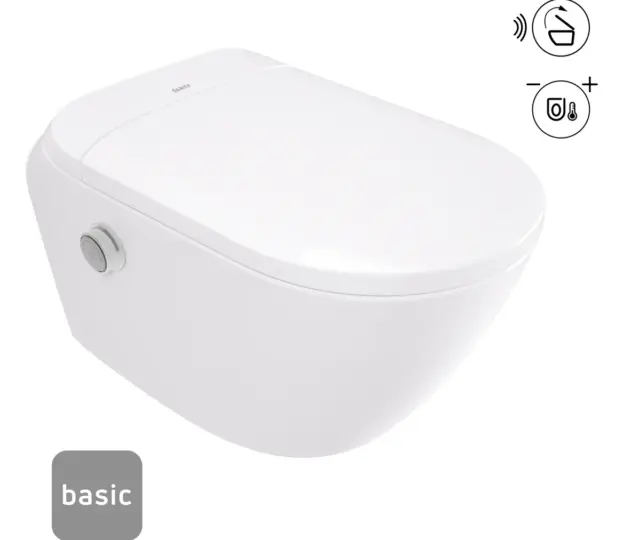
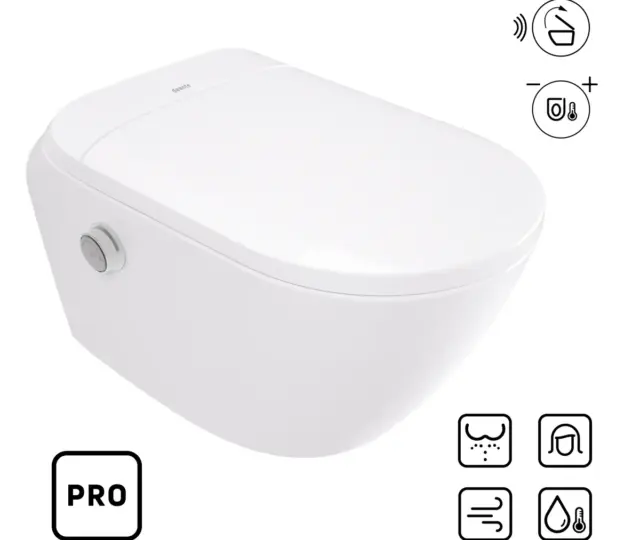
Everything you need to know.
- Wash and massage modes
- Warm-air drying and seat heating
- Odour neutralisation and touch-free use
- Electrical connection and wet zones
- Water supply and backflow protection
- Choosing a frame
- Fully integrated smart toilet
- Electric bidet seat (separate seat)
- Self-cleaning nozzles and UV sterilisation
- Descaling
- 1. Does a smart toilet use a lot of electricity?
- 2. What happens if there is a power cut at home?
- 3. Are smart toilets suitable for children too?
- 4. How do you clean a smart toilet?
- 5. Can water spray over the edge of the toilet?
In today’s smart-home bathroom, smart toilets (also known as shower toilets, bidet toilets or Japanese toilets) have become synonymous with the ultimate in personal hygiene and everyday well-being. They are high-tech sanitary appliances that combine the functions of a ceramic toilet with warm-water bidet cleansing, warm-air drying, a heated seat and automatic odour removal. Unlike ordinary toilets, smart toilets replace toilet paper with a gentle jet of water, giving you a thorough clean that is kind to the skin.
A smart toilet turns your daily routine into a comfortable spa experience, letting you adjust the temperature, water pressure and nozzle position with a remote control or a smartphone app. From a homeowner’s point of view, smart toilets add value to the bathroom, reduce paper consumption and provide accessible, dignified hygiene for family members of all ages.
1. How do smart toilets work and what features do they offer?
A smart toilet combines sanitary ceramics with electronics, a water heater and micro-motors that control automatic hygiene cycles.
Wash and massage modes
The core feature is a water jet with adjustable temperature. Most models offer separate programmes for rear washing and a gentler front wash (lady wash). There are also pulsating and back-and-forth (oscillating) massage jets, which improve circulation and ensure a thorough clean.
Warm-air drying and seat heating
After the water wash, the toilet dries the skin with a pleasant stream of warm air, making toilet paper practically unnecessary. On a cold morning, the seat with adjustable temperature offers welcome warmth, switching to an energy-saving standby mode when nobody is in the room.
Odour neutralisation and touch-free use
A built-in carbon filter switches on as soon as someone sits down, drawing odours straight out of the bowl and filtering the air before returning it to the room. On models with motion sensors, the lid opens and closes automatically for a completely contact-free, bacteria-free experience.
2. Installation requirements and preparation for a smart toilet
Installing a smart toilet involves more than just connecting the soil pipe – you also need to take electrical and water safety into account.
Electrical connection and wet zones
As this is an electrical appliance in a wet room, the circuit must be protected by a residual current device (RCD 30 mA). The power cable (230 V) is usually brought through the wall directly behind the toilet’s mounting point, giving IPX4 moisture protection and a neat, concealed connection with no visible wires.
Water supply and backflow protection
Smart toilets need a stable water pressure (usually at least 1.5–2.5 bar). Under the European standard EN 1717, a toilet with a washing function must have a built-in backflow preventer (type AB air gap), which prevents water from the toilet flowing back into the building’s drinking water supply if the pressure drops.
Choosing a frame
The best results come from a system in which the smart toilet is installed on a strong wall-hung frame. If your bathroom already has a quality wall-hung toilet, it makes sense to choose a smart model from the same product family or a compatible system that matches the fixing centres (180 mm) and flush mechanism of your existing frame.
3. Technical comparison: integrated smart toilet vs smart toilet seat
Homeowners often have to decide whether to replace the entire ceramic or fit an electric seat to their existing toilet.
Fully integrated smart toilet
This is an all-in-one solution with a flawless look: all the water hoses and electrical wiring are hidden behind the ceramic inside the frame. As well as washing, the toilet also controls the automatic flush according to whether the user is present.
Electric bidet seat (separate seat)
Ideal for quickly upgrading an existing bathroom without breaking any tiles. All you need is a nearby socket and a water outlet. The downsides are a bulkier look and visible connection hoses next to the toilet.
4. Hygiene, limescale protection and long-term care
To keep the appliance working smoothly, its fine water nozzles and heating elements need regular maintenance, especially in Estonia’s hard-water areas.
Self-cleaning nozzles and UV sterilisation
Most high-end models automatically rinse their stainless steel or ceramic-coated nozzles with clean water before and after each use. More expensive models also use UV light or electrolysed water, which kills 99.9% of bacteria without chemicals.
Descaling
Hard water can clog the micro-nozzles. Quality smart toilets have an automatic descaling programme (much like coffee machines), to which you add a special descaling liquid from time to time, ensuring a long life for the heating element and hoses.
Key points
Smart toilets are no longer just a feature of luxury hotels, but a practical and hygienic investment for the modern home. They offer unrivalled comfort, raise the standard of personal hygiene and are ideal for families with children, people with limited mobility and anyone who values comfort and cleanliness in everyday life.
If you are planning a bathroom renovation or want to take a step towards smarter sanitary ware, start with a solid foundation. Explore our top-quality products and find the right wall-hung toilet in the Nordhauser online shop – an easy base on which to build the washing system of your dreams.
-
Ultimate hygiene: Warm water cleans gently and hygienically, significantly reducing skin irritation and toilet paper use.
-
The complete comfort package: A heated seat, adjustable water temperature, odour removal and warm air create a luxurious experience.
-
Requires an electrical connection: Installation needs a 230 V supply with RCD protection and compliance with the EN 1717 water protection standard.
-
Compatibility with wall-hung frames: The best visual result comes from a dedicated integrated concealed solution.
-
Regular descaling: Limescale protection and filter maintenance keep the appliance running smoothly for many years.
Frequently asked questions (FAQ)
1. Does a smart toilet use a lot of electricity?
Today’s smart toilets are very energy-efficient. Most models have a smart standby mode and an instant heating system that only heats water at the moment of use. Average energy consumption is in the range of 15–30 kWh per month.
2. What happens if there is a power cut at home?
During a power cut, the appliance works like an ordinary toilet – the mechanical flush keeps working (if the frame uses a mechanical button), but the electronic functions (water jet, seat heating, drying) are temporarily out of action.
3. Are smart toilets suitable for children too?
Yes, many models have a special children’s setting (Child Mode) that makes the water jet pressure and temperature gentler and moves the nozzle further forward.
4. How do you clean a smart toilet?
Use neutral cleaning products and a soft cloth. As the toilet contains electronics, never clean it with a pressure washer or use strong abrasives or solvents. The nozzles are cleaned with a special mode started from the remote control.
5. Can water spray over the edge of the toilet?
No. The wash nozzles have sensors that only allow water to spray when the weight or body heat of an actual user is detected on the seat.