The bathroom is no longer just a functional washroom. It is a place where we start our day by gathering energy and end it by relaxing. That is why bathroom tiles and their choice are of critical importance – they determine the atmosphere, the spaciousness of the room and even how often you have to clean. Once you have already clarified the technical specifications (such as slip resistance and wear class), you are faced with an even more difficult question: what style, size and finish to choose?
In this article, we dive into the world of bathroom design. We’ll explore how large-scale tiles can visually expand a small space, why wood-effect tiles are a better choice than real wood in the bathroom, and how to play with the contrasts of matte and glossy surfaces. Whether you’re planning a major renovation or a refresh, here’s some inspiration and practical advice to make your bathroom look like a luxurious spa.
Trends and styles: what are the trends for 2026?
Today's bathroom fashion is dominated by a clear trend: bringing nature indoors. Since the bathroom is a humid space, using real wood or porous natural stone is risky. This is where modern ceramic solutions come to the rescue.
Close to nature: imitation wood and stone
Wood-look tiles have been a huge hit in recent years. Thanks to digital printing technology, they are almost as similar to real wood as you can imagine, even imitating the grain and texture of the wood.
- Why choose it? Wood brings a warmth and coziness to a room that ceramics usually don't. Unlike real wood, these tiles are not afraid of water or mold.
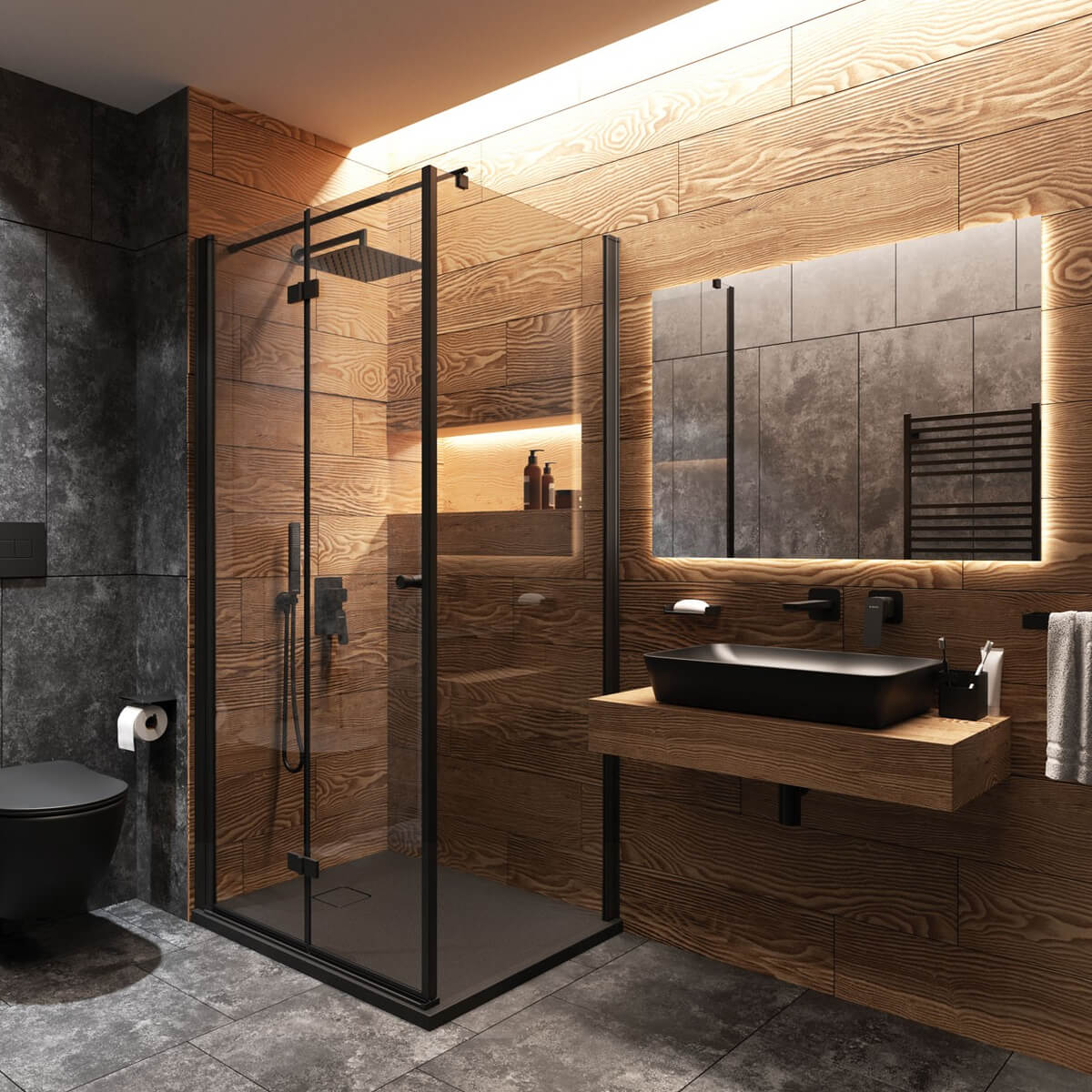
- Design tip : Use wood imitation on the back wall or floor of the shower enclosure, combining it with gray concrete imitation. This creates an exciting contrast between warm and cold materials.
Luxurious marble imitation
Marble is a timeless classic, but natural marble is porous, susceptible to stains, and expensive. Ceramic tiles that imitate Carrara or Calacatta marble offer a luxurious look without the maintenance hassles.
- Trend : Tiles with large patterns and bold grooves are especially popular, turning a bathroom wall into a work of art.
Industrial concrete look
A modern, minimalist home often calls for a more "raw" approach. Concrete-look tiles are ideal for loft-style bathrooms. They are practical because their variegated pattern hides water stains and dust well.
Tile size and perception of space
One of the most common questions is: " Can you put large tiles in a small bathroom? " The answer may surprise you. Tile size is a powerful tool that can visually change the proportions of a room.
Large-sized tiles (XXL)
It's a common myth that a small space requires small tiles. In fact, large-sized tiles (e.g. 60×60 cm, 60×120 cm or even 120×240 cm) can make a small bathroom feel more spacious.
- Reason : A larger tile means fewer joints. Joints "split" the surface and create visual noise. A smooth surface with few lines deceives the eye and makes the room seem larger.
- Uses : Ideal for walls and floors to create a monolithic look.
Mosaic tiles and their role
Although large tiles are in fashion, mosaic tiles have not disappeared. Their role has changed – they are now mainly used as accents.
- Functionality : Mosaic is indispensable on the floor of a shower corner when it is necessary to create a slope towards the drain. Small tiles bend with the slope, which large tiles cannot.
- Design : Use mosaic in niches, around a mirror, or to create a single accent wall to bring texture to a space.
Visually enlarging a small bathroom
In addition to size, the installation direction also matters.
- To make it taller : If your bathroom has a low ceiling, stack rectangular wall tiles vertically. This will direct the eye upwards.
- Wider : Horizontal layout visually stretches the space.
Unique perspective : Many people are afraid of large tiles in a small space because of the cutting waste. In fact, if you plan the layout carefully, a large tile in a small bathroom (e.g., one tile covering the entire width of the wall) can give a more luxurious impression than anything else.
Surface treatment: matte vs. glossy
Should you choose bathroom tiles that shine like a mirror or prefer a velvety matte finish? It's not just a matter of taste, but also directly affects lighting and cleaning.
When to prefer glossy tiles?
Glossy tiles reflect light.
- Advantage : They make a dark, windowless bathroom brighter and more spacious. This is a great choice for small bathrooms in prefabricated houses.
- Cons : Water stains, limescale, and fingerprints are immediately visible on a glossy surface. A glossy floor is also more slippery in wet conditions (although you need to follow the R-class, which we talked about in another post).
The advantages of a matte surface in the bathroom
Matte tiles are modern and calm.
- Advantage : The matte surface "absorbs" light, creating a soft and cozy atmosphere. More importantly, the matte surface perfectly hides dried water stains and dust.
- Texture : Many matte tiles are embossed (such as stone or wood texture), which adds depth to the room and is warmer and more solid underfoot.
Color palette and mood
Colors affect our psyche more than we think. The bathroom is a place for emotional charging.
Light colors and spaciousness
White, cream and light grey are classics for a reason. Light ceramic tiles create a sense of cleanliness and freshness. They are foolproof choices that never go out of style and can be added to with colourful towels or furniture.
Dark tones and coziness
Black, charcoal grey and navy blue are rising trends. A dark bathroom is dramatic, intimate and extremely elegant.
- Warning : dark tiles "eat" light! When planning a dark bathroom, the lighting must be very well thought out (mirror lighting, ceiling lights, mood lighting).
- Combination : dark stone slab with warm wood is one of the most stylish combinations ever.
Joints and installation methods
It is often forgotten that a joint is a design element.
Herringbone and other patterns
The herringbone pattern is extremely popular, especially for smaller, elongated tiles. It adds dynamism and luxury to the room. The vertical stack bond is modern and minimalist.
The importance of grout color
- Tone-on-tone : When the grout is the same color as the tile, it creates a uniform and calm surface. This is recommended for marble imitation and large tiles.
- Contrast : White tile with black grout (or vice versa) highlights the shape and pattern of the tile. This works well with subway tiles to achieve a retro or industrial look.
Quick reminders
Remember the golden rule: less is often more. Choose one or two key elements (like a striking shower screen or an exciting floor pattern) and keep the rest of the space neutral. This way you’ll achieve a timeless result that will delight you for years to come.
Which style appeals to you? Do you dream of a crisp marble bathroom or a warm wooden spa? Check out our online store selection and find your favorites. If you have any questions about design or quantities, write to us – we will help you create the bathroom of your dreams!
- Imitation wood is practical : you get the warmth of wood without the risk of moisture damage.
- Large tile = larger space : fewer joints make a small bathroom visually more spacious and easier to clean.
- Light determines the finish : choose a glossy tile for a dark room, a matte tile is better suited for a bright room.
- Play with the grout : a contrasting grout highlights the pattern, a tone-on-tone grout creates a calm background.
- Combine: Don't be afraid to use different tiles on the floor and walls, but keep the overall tonality in harmony.
Frequently asked questions
u003cstrongu003eKas ma võin panna põrandaplaate seina ja vastupidi?u003c/strongu003e
Põrandaplaate võib peaaegu alati panna seina – need on tugevad ja vastupidavad. u003cstrongu003eVastupidi aga mitteu003c/strongu003e: seinaplaadid on sageli hapramad ja libedama glasuuriga ega talu peal kõndimist. Kontrollige alati plaadi kasutusala märgistust.
Milline plaadi suurus on parim väikesesse paneelmaja vannituppa?
Üllataval kombel sobivad sinna hästi suuremad plaadid, näiteks 60×60 cm või 30×60 cm. Vähem vuuke u0022rahustabu0022 ruumi. Vältige väga väikeseid plaate seintel, kui te just ei soovi luua spetsiifilist mosaiikefekti.
Kas hele vuuk vannitoa põrandal on halb idee?
Jah, üldjuhul küll. Vannitoa põrand kogub paratamatult mustust ja vett. Valge või väga hele vuuk muutub aja jooksul hallikaks ja ebaühtlaseks. Põrandal on mõistlikum kasutada helehalli, beeži või tsemenditooni vuuki, mis on andestavam.
Kuidas valida plaate, kui vesi on väga lubjarikas?
Kui teil on kare vesi, vältige väga tumedaid ühevärvilisi plaate (eriti musta), kuna kuivanud veeplekid jäävad neile valgete rantidena näha. Parim valik on helehall, beež või kirju mustriga (nt kivimitatsioon) plaat, mis peidab katlakivi jälgi.
Kas trendikad plaadid lähevad kiiresti moest?
Väga spetsiifilised mustrid ja erksad värvid võivad tõesti ajas väsidata. Looduslähedased imitatsioonid (puit, kivi, marmor, betoon) on aga ajatud. Kui soovite järgida trende, tehke seda pigem aksessuaaride või kergemini vahetatavate elementidega, hoides põhiplaadid neutraalsena.