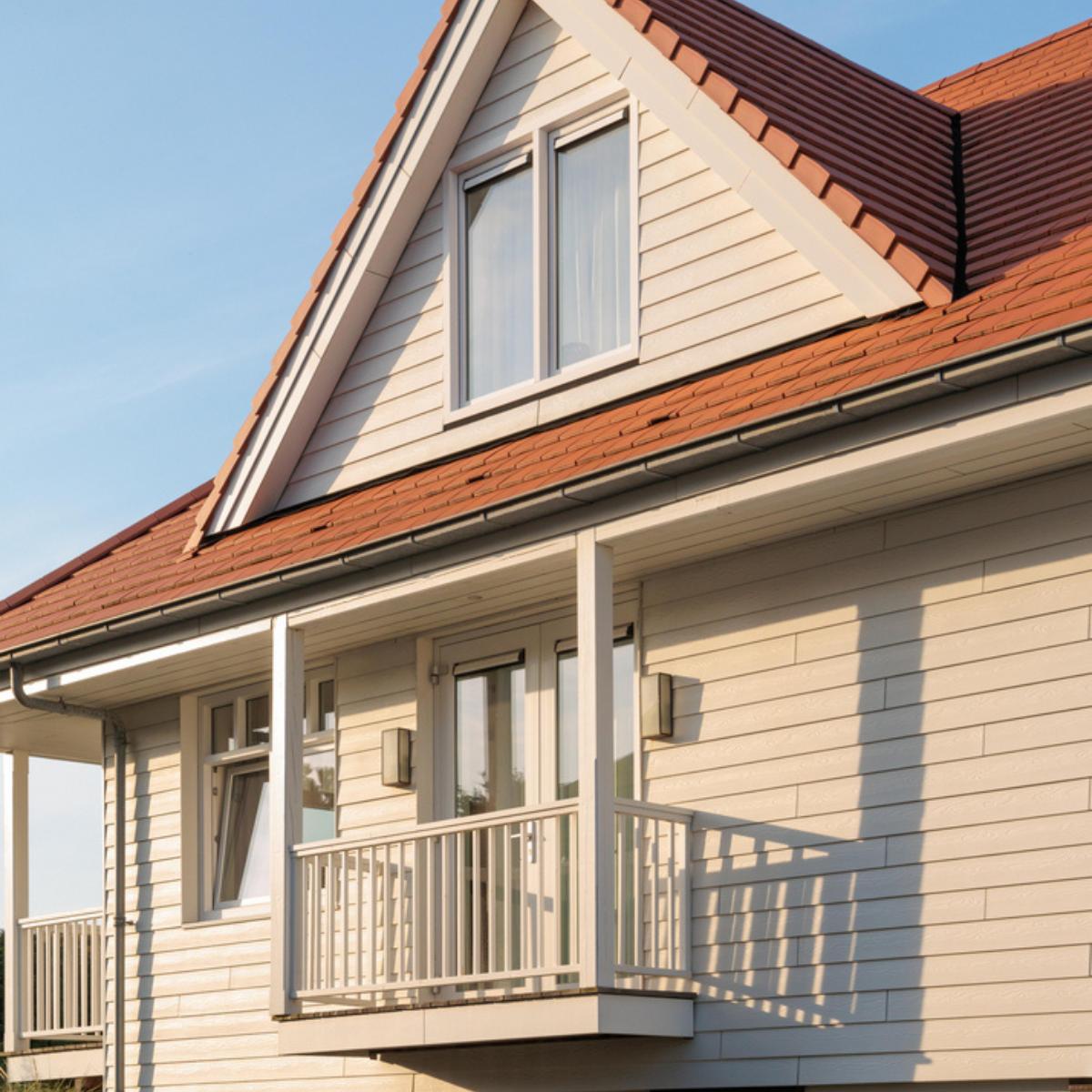
The facade of a home is like a business card – it creates a first impression, reflects the owner's taste and, most importantly, protects the building's structures from our volatile Nordic climate. Historically, wood has been king in Estonia, but in recent decades a serious competitor has entered the market with force: fiber cement. When planning to renovate the facade or build a new house, every homeowner faces the question: which exterior siding to choose?
Should you stick with warm, traditional wood or invest in modern, durable fiber cement? In this article, we won't try to sell you on one specific product, but rather pit these two popular materials against each other. We'll compare their durability, maintenance, installation, and price so you can make an informed decision that will serve you for decades.
Wooden siding – a traditional and vibrant choice
Wood is a building material with deep roots in Estonia. It is a warm, natural and renewable resource. Most Estonian wooden facades are made of spruce or pine, less often larch.
Natural beauty and workability
The biggest advantage of wood siding is its authentic look. No imitation can fully replicate the texture, smell, and warmth of wood. In addition, wood is a "friendly" material for builders – it is easy to saw, sand, and paint. If the siding gets damaged (for example, you drive your car into the corner of the house), replacing or repairing the wood is a relatively simple and inexpensive process.
Wood challenges
However, the beauty of wood requires sacrifices. Wood is a living material that expands and contracts according to humidity.
- Moisture damage : If installed incorrectly or with insufficient ventilation, the wood may start to rot or mold.
- Pests : Wood can be attacked by pests, including both insects and woodpeckers.
- Fire hazard : wood is a combustible material that requires strict adherence to fire safety requirements in densely populated areas.
Fiber cement siding – the strength of stone with the look of wood
Fiber cement siding is a composite material made of cement, sand, cellulose fiber, and water. It is designed to withstand conditions where wood would fail.
Maintenance-free facade?
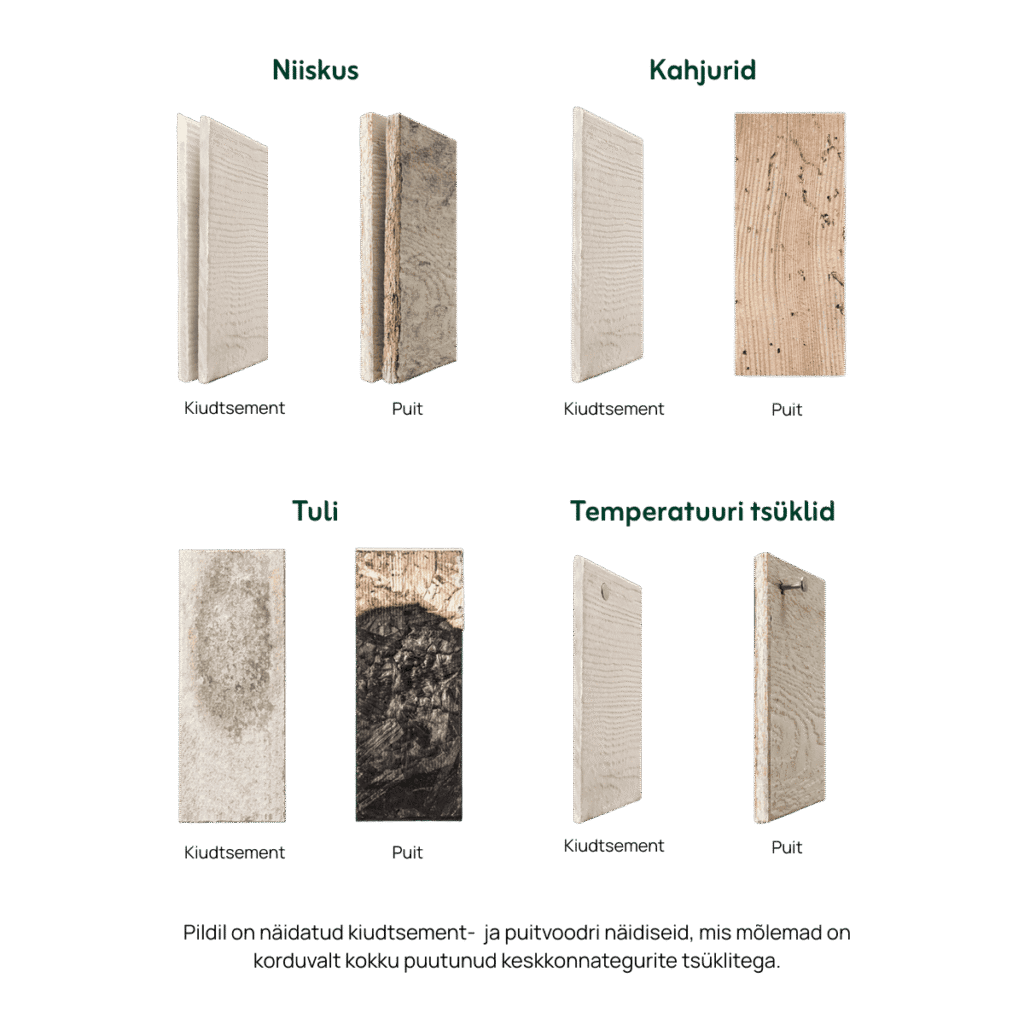
While there is no such thing as a 100% maintenance-free material, fiber cement is the closest thing to it. It won't rot, expand or shrink with temperature fluctuations, and is resistant to UV radiation.
- Fire resistance : Fiber cement is typically classified as A2 fire resistance, meaning it is essentially non-combustible. This is a great advantage in densely built-up areas.
- Stability : because the material does not "play" like wood, the paint coating lasts much longer without cracking.
Special features of fiber cement
Fiber cement is denser than wood, which means that installing siding requires special cutting tools (diamond blades). The material is also brittle – if you pick up a long board incorrectly, it can crack and break.
Durability and maintenance: the biggest difference
Herein lies the main difference between these two materials. As a homeowner, you need to ask yourself, "How often do I want to paint my house from the top of a ladder?"
Maintenance interval for wooden facades
High-quality, industrially painted wooden siding (primer + 2 coats of paint) will last for about 10 years in the Estonian climate. Then the facade must be washed and repainted. If you use unimpregnated or only primed boards and paint them yourself with a brush, the need for maintenance may arise after 5–7 years. In the case of wood, it is critical to ensure that the ends of the boards are properly finished, because this is where the wood absorbs the most moisture.
Fiber cement longevity
Fiber cement board manufacturers often promise a lifespan of up to 50 years or more. A coat of paint will remain stable on fiber cement for 15-20 years or more, as the substrate does not move. Maintenance is usually limited to washing the facade with a pressure washer or brush to remove dust and cobwebs. This is a true weatherproof solution for the lazy (or convenient) homeowner.
Cost: Initial Price vs. Lifetime Cost
The price tag in the store can be deceiving. Let's look behind the numbers.
- Material price : Standard spruce siding is cheaper per square meter than fiber cement. The price difference can be 1.5–2 times in favor of wood, depending on the profile and processing.
- Installation cost : Wood is generally faster and cheaper to install. Fiber cement requires more specialized tools and is more time-consuming, which increases labor costs.
- Total Cost of Ownership (TCO) : This is where fiber cement wins. When you factor in the costs over the next 20-30 years (painting, scaffolding rental, wood repairs), fiber cement may prove to be more cost-effective in the long run, as maintenance costs are minimal.
Quick reminders
Both materials are excellent when installed correctly. Wood siding is a timeless classic that ages with the house and provides warmth. Fiber cement, however, is a modern answer to the fast pace of life, where home maintenance could be minimal.
Are you still in doubt? We recommend requesting samples and a quote for both solutions. Calculate the cost of the material and installation and consider whether you are ready to paint the facade in 5 years.
- Budget : If the initial construction budget is tight, wood siding is a more affordable option.
- Convenience : If you want a "install and forget" solution, choose fiber cement.
- Authenticity : Natural wood is better suited for an old house being restored or an area with environmental value.
- Safety : In densely populated and fire-prone zones, fiber cement (class A2) is safer.
- Climate : In very humid and shady places (inside the forest), where wood tends to grow moss, fiber cement is a safer choice.
Frequently asked questions
Kas kiudtsement voodrilauda saab üle värvida?
Jah, saab küll. Kuigi tehasevärv kestab kaua, võib tekkida soov maja tooni muuta. Selleks tuleb kasutada spetsiaalseid betoonile või kiudtsemendile mõeldud fassaadivärve. Pind tuleb eelnevalt hoolikalt puhastada.
Kumb materjal on parem soojustuse katmiseks?
Mõlemad sobivad suurepäraselt tuulutatava fassaadi ehitamiseks. Oluline pole niivõrd voodrilaud ise, vaid see, et fassaadikate oleks paigaldatud õigele roovitusele ja taga oleks piisav õhuvahe (tuulutusliist), mis laseb soojustusest tuleval niiskusel välja kuivada.
Kas puitvoodrilauda tasub osta värvituna või värvimata?
Ehituseksperdid soovitavad kindlasti osta tööstuslikult värvitud puitvoodrilauda. Tehases toimub värvimine kontrollitud tingimustes (õige niiskus, temperatuur, värvikihi paksus), mis tagab oluliselt pikema eluea kui objektil pintsliga värvides.
Mis on u0022Cedralu0022 ja kuidas see seostub kiudtsemendiga?
Cedral on üks tuntumaid kiudtsementvoodrilaudade brände, mida Eestis müüakse. Sageli kasutatakse seda nime sünonüümina kogu tootekategooriale, sarnaselt nagu u0022Gyprocu0022 kipsplaadi kohta.